The Little River Is Running Free Under Winter Street. Here's What Comes Next.
November 12, 2026
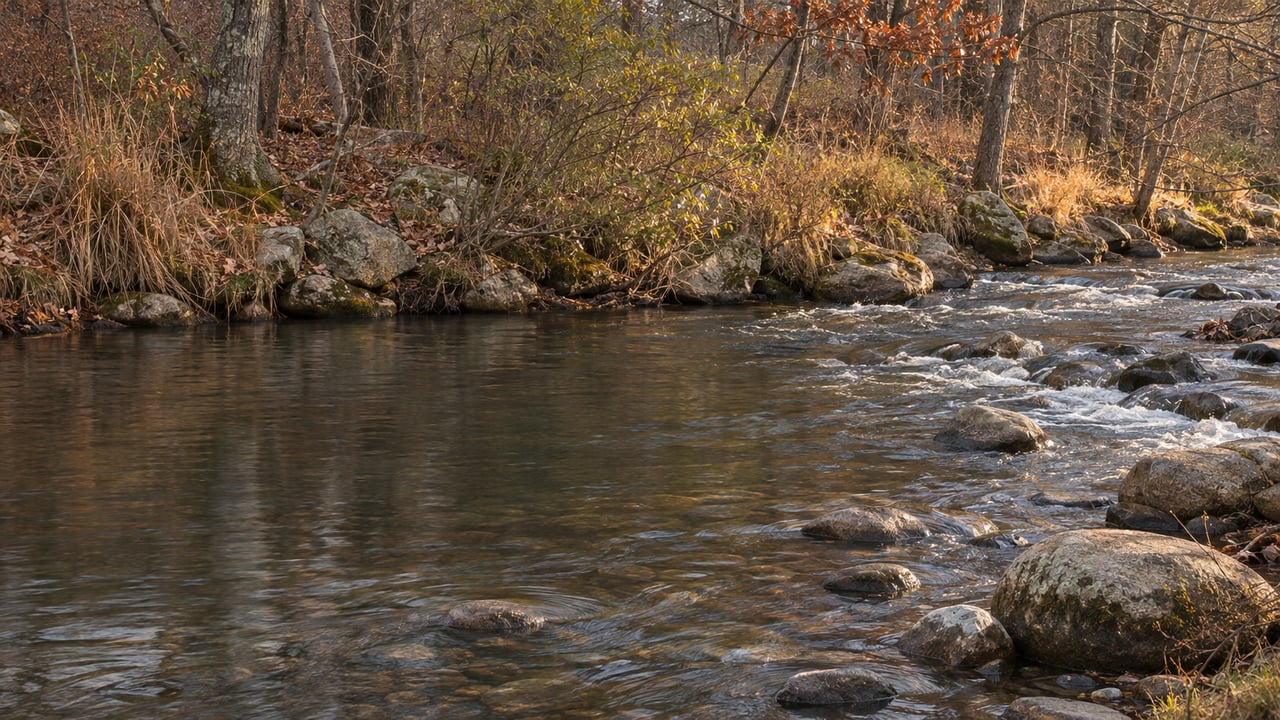
On the rainy morning of Saturday, November 7, more than two dozen Haverhill residents came to Cashman's Field on Hilldale Avenue to see what the city had been doing to the Little River all fall. By then the river looked different from the Winter Street bridge. According to WHAV, most of the stone dam beside the old Stevens Street mill had been removed, and the Little River was running "almost unobstructed" under Winter Street toward the Merrimack.
Not everyone there had liked the project. One resident, Wilbur "Bill" Mahoney, told city staff and contractors he had come around, as WHAV reported:
"I was totally against this. I thought it was foolish and a waste of money, but talking to you guys today, I can see some of …you swayed me."
What he and the other residents saw was the start of a two-year rebuild. The goal is to turn a stretch of river most of Haverhill has only seen over a guardrail into one people can walk along, fish from and launch a kayak into.
The idea of opening this part of the Little River to the public isn't new. In his 2016 State of the City address, then-Mayor James J. Fiorentini announced a plan to redevelop the Pentucket Mill on Stevens Street. Winn Development proposed 80 housing units with a restaurant on the first floor. As WHAV reported then, Fiorentini said the project would bring "a public park, a walkway, to open Little River to the public in that area for the first time in a century."
That redevelopment never happened. WHAV's project history says it became clear early on that nothing would be built as long as the dam remained as a possible liability. Whatever plans were left ended after a three-alarm fire on April 28, 2026. According to WHAV's report on the fire, the first call came in at 2:40 a.m. at the former mill building at 14 Stevens Street.
The dam was a relic of the mill era. The City of Haverhill's project page describes a cascading granite structure about 75 feet long and up to 12 feet high. It sat roughly 70 feet upstream of Winter Street, and the mill's foundation was built into one end of it. The dam once supplied mechanical power to the mill and later hydroelectric power. The mill shut down within the last 40 years, and the dam has had no purpose since. In May, WHAV reported an agreement under which the trustees of the mill property would transfer the dam to the city at no cost, with councilors expected to act on it.
Some of the river's industrial past has reappeared as the work goes on. At the November 7 session, Luciano's Excavation project superintendent Kyle Curley pointed to an iron structure on a white concrete wall across the water. According to WHAV, those are the original gate wheels that opened and closed the Pentucket Mill's raceway.
City environmental health technician Robert E. Moore Jr. described another find. Behind its stone face, the dam had a tongue-and-groove timber backing.
If you use Cashman Park, plan around the work. The city says equipment enters and leaves the river corridor from Winter Street and from Cashman Park. Parts of the park are being used for construction staging and are closed to the public. The city doesn't expect traffic delays or closures.
Removing the dam is only the start. The contract went to Luciano's Excavation of Taunton for $7.3 million, and Haverhill has received more than $4 million in state grants toward the project. Here is the order of work from the city's project factsheet and the November tour:
The recreation features are what turn the river into a public place. Julianne Busa, senior project manager at consultant Fuss & O'Neill, described the aim in 2023, as WHAV reported: "We're also looking to increase river access and provide additional ways for people to get to the river, interact with the river, utilize the river and create some public greenspace and increased tree cover in the downtown area."
The city's recreation plan for the stretch between Winter Street and Cashman's Field shows each piece. All of these are planned and part of the build-out running toward 2028.
| Planned feature | Where | Details from the plan |
|---|---|---|
| Canoe and kayak launch | Behind Cashman's Field | Wooden launch deck reached by gravel paths |
| Fishing platform | Cashman's Field | Stacked granite steps and stone platforms at the water |
| Pedestrian bridge | From Cashman's Field across the river | 127-foot prefabricated steel truss bridge |
| Riverside trail | East bank, toward Stevens Mill | About 2,000 feet long, four feet wide, gravel |
| Winter Street overlook | Sam's Food Store property, 89 Lafayette Square | Permeable-paver platform, boulders, stone bench, fencing, native plantings |
When it's finished, the bridge will connect a city ballfield to a trail on the far bank of a river that has been hard to reach for generations. Officials at the November session also listed boating from a launch behind Cashman's Field among the main benefits.
Paddlers and anglers will share the same river design. A draft fishway construction permit from the state Division of Marine Fisheries lists passage for river herring and American eel as project goals, and it calls for no fishway structures. WHAV reported that six to eight rock weirs, placed with what contractors called GPS "millimeter accuracy," will hold water levels while letting fish move upstream and boats get through. Moore said that at its driest, the river is designed to be no shallower than 18 inches.
Curley described what's being built into the riverbed: "There are some fish pools designed specifically in the bottom of the river that will hold more water than other areas. So, that way the aquatic life that we hope to see here in the future has a place to go."
The factsheet names the fish the restored river could support. It could hold cold-water species such as trout and give alewife, smelt, American eel and blueback herring access to spawning grounds.
A few details matter for people who already use the river upstream. Moore said the Little River is stocked with trout in some years at the Rosemont Bridge, and the new Rosemont Street bridge includes a break in the guardrail for putting in a canoe or kayak. He also said the dam's effect on the water ends at about the MBTA bridge, so "what you normally see up at Clement Farm and beyond is not intended to be changed at all by this."
The session ended with an idea that goes beyond the river. As WHAV reported, Mayor Melinda E. Barrett said she would like to see part of the burned mill property become a green space and move the statue of Gen. Marquis de Lafayette there. "I would love, personally, to move Lafayette over there, give him a nice little Lafayette Park," she said.
The statue was moved to the side of Lafayette Square during a $1.2 million state reconstruction of the square that began in 2003. Longtime residents have said the move diminished it, and a 2005 state reconnaissance report concluded that "the large Lafayette statue is no longer a focal point." City engineer Lisa DeMeo coordinated that report, and Barrett served on its committee.
Barrett called the idea "way too early," and contaminated ground on the upriver end of the mill property has to be dealt with first. When she heard about the old gate wheels, she suggested saving them for any future park.
The city's project page posts updates, documents and construction photos, and the Haverhill Conservation Department takes questions from residents who couldn't make the November session.
Projects like the Little River restoration change how a part of the city feels long before they're finished, and we pay attention to them when we talk with clients about Haverhill. If you're thinking about a move in or near the Lafayette Square area and want a calm, informed conversation about what's changing nearby, Shawna Phillips and the Prestige Properties team would be glad to talk it through. Work With Us.
Stay up to date on the latest real estate trends.
Our team is dedicated to achieving the best possible outcomes while upholding the highest standards of professionalism. Whether finding the perfect home, maximizing property value, or building wealth through real estate, we strive to make every transaction seamless, successful, and rewarding.